
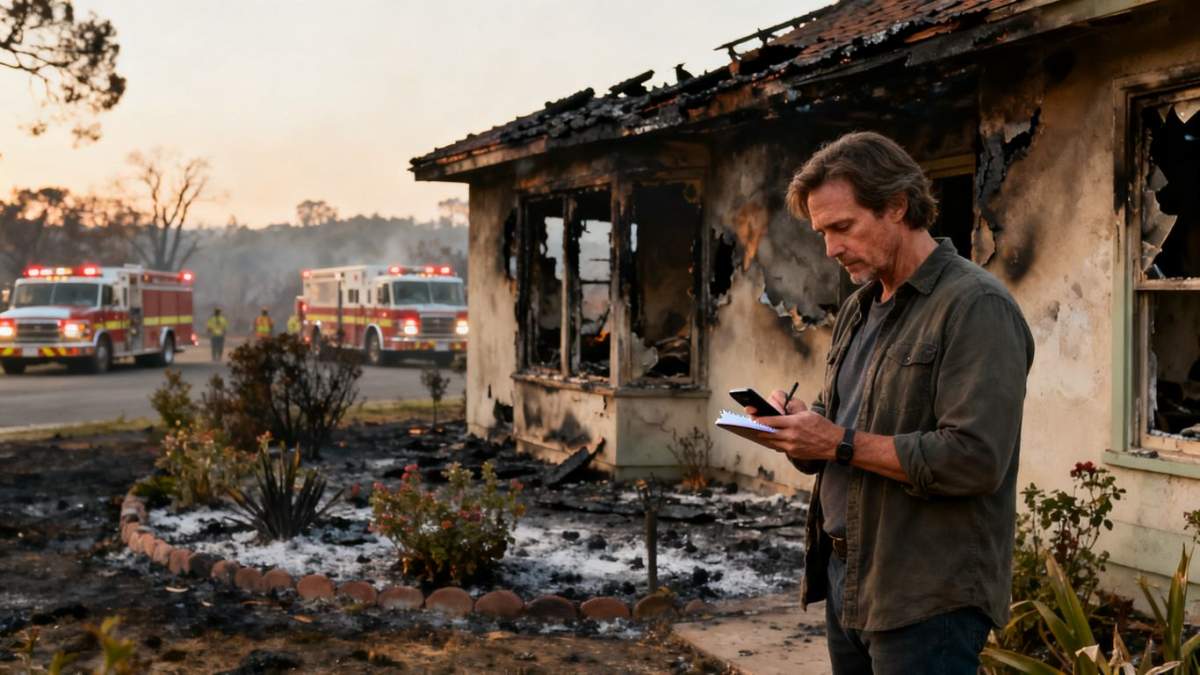

After a wildfire, returning home can feel urgent, but the first priority is protecting people from unstable structures, ash, and other hazards. The recovery process can take time, and damage may not be obvious from the road or at first glance. Once authorities say it is safe to enter, careful records can help the policyholder explain what happened and what was lost. Documentation should never come at the expense of safety.
Wait for official clearance before returning to the property
A home that appears intact may still have unsafe floors, damaged utilities, or other hazards. The policyholder should follow evacuation orders and wait for direction from local officials before approaching or entering the property. If access is restricted, ask the relevant local agency when conditions may be reassessed rather than trying to inspect the home independently.
Photograph and record damage when it is safe to do so
Once entry is permitted, take wide photos of each affected area and closer images of specific damage. A slow video walkthrough can add context, especially when it captures the route between rooms and the condition of walls, ceilings, and floors. Save original files when possible and note the date, location, and what each image shows. A clear visual record can make it easier to discuss damage later.
Keep receipts for emergency expenses and temporary repairs
Save receipts for costs incurred to protect the property or meet immediate needs, such as temporary coverings or emergency supplies. Record what was purchased, why it was needed, and where it was used. Coverage and reimbursement rules vary, so the policyholder should ask the insurer how to submit these expenses and keep copies of all supporting documents.
Avoid discarding damaged property before documenting it
If it is safe, photograph damaged items in place and record their condition before disposal. Some items may pose a health risk or need to be removed quickly; in that case, the policyholder should document them first if practical and ask the insurer what records it needs. Keep samples or items only when doing so is safe and does not create a hazard.
Start your wildfire insurance claim
A wildfire insurance claim can involve several conversations and documents, so it helps to begin with a simple record-keeping system. The policyholder can contact the insurer or agent once immediate safety needs are addressed, even if the full extent of the damage is not yet known. Early contact can clarify how to report the loss and what information to gather next. Residents of Oregon may also consult state wildfire claim guidance for local recovery resources.
Contact your insurer as soon as you can
Report the loss through the insurer’s preferred channel, such as a phone line, online portal, or agent. If the policyholder cannot reach the usual contact, the insurer may have a dedicated disaster claims process. A claim can generally be opened before every damaged item has been inventoried; the initial report should be accurate, with updates provided as new information becomes available.
Gather your policy details and claim information
The declarations page, policy number, insurer contact information, and any claim confirmation details can help keep communications organized. If documents were lost in the fire, the insurer or agent may be able to provide copies. The policyholder should write down the assigned claim number and the name or contact details of each person handling the claim.
Ask about claim deadlines, required forms, and next steps
Ask what forms or records are needed, how the insurer wants them submitted, and whether any time limits apply. The policyholder can also ask what happens after the first report, when an inspection may be arranged, and how to report additional damage found later. In places with state-specific consumer guidance, the applicable rules and available assistance may differ, so local resources can be useful.
Keep a record of calls, emails, and claim decisions
A dated communication log can prevent details from getting lost during a lengthy recovery. After each call, note who participated, what was discussed, and any promised follow-up. Save emails, letters, uploaded files, and decisions together, and ask for important instructions or explanations in writing when possible.
Build a thorough record of your losses
A detailed inventory helps turn a difficult, emotional task into a series of manageable steps. The policyholder does not need to complete everything at once; starting with the most accessible rooms or the items that can be recalled clearly is reasonable. Photos, receipts, and other records can support the inventory, but a lack of paperwork does not mean the loss should go unreported. The insurer can explain what evidence it will consider.
Create a room-by-room inventory of damaged belongings
List affected belongings by room, with a description, approximate age, quantity, and estimated cost to replace when known. Grouping similar items can make the first pass less daunting, then details can be added as they are remembered. A useful inventory might include:
- Furniture and household equipment, including approximate age and condition before the fire
- Clothing, shoes, linens, and personal items, with quantities where possible
- Electronics, appliances, and tools, including make or model if known
- Items stored in garages, closets, sheds, or other areas that may be easy to overlook
These notes are a starting point, not a requirement to guess at exact values. The policyholder can mark uncertain details for later follow-up and share updates with the insurer as the inventory develops.
Document smoke, ash, and soot damage as well as fire damage
Not all wildfire-related damage is visible as burned material. Smoke, ash, and soot may affect surfaces or belongings in areas that were not directly touched by flames. Record where residue or odor is present and photograph visible effects; avoid attempting cleanup before asking whether the insurer wants an inspection or other documentation.
Gather receipts, photos, and other proof of ownership
Receipts, bank or credit-card records, product registrations, and older photographs may help establish that an item was owned and describe its condition. Digital records may be available through email accounts, retailers, or cloud storage, while friends and family may have photos showing belongings in the home. The policyholder can keep copies of these materials with the inventory rather than relying on any single form of proof.
Note damage to detached structures and landscaping
The inventory should include garages, sheds, fences, and other detached structures, as well as damage to trees or landscaping. Take separate photos and note the location and apparent condition of each affected area. Whether a specific item is covered, and how much coverage applies, depends on the policy’s terms and limits.
Prepare for the adjuster’s inspection
An inspection gives the insurer an opportunity to assess reported damage, but the policyholder can also use it to point out areas that need attention. Before the visit, gather the inventory, photographs, receipts, and any questions that have arisen. The inspection is one part of the claim review, not a reason to stop documenting new findings. A written record of what was viewed and discussed can help keep both sides aligned.
Ask what the inspection will cover and who will attend
Confirm the appointment time, the areas the adjuster expects to inspect, and whether anyone else will be present. Ask whether the policyholder should prepare particular documents or leave damaged materials undisturbed. If access to the home or a structure is limited for safety reasons, explain that in advance and ask how the inspection can proceed.
Point out damage that may be hidden or difficult to see
Walk through the property with the adjuster when safe and identify damage that may not be apparent from a quick visual check. This can include affected rooms away from the most visible fire damage, belongings with smoke or soot exposure, and areas where access is restricted. Share photos and notes, and ask that concerns not fully assessed during the visit be recorded for follow-up.
Get independent repair estimates when appropriate
A contractor’s written estimate can help the policyholder understand the likely repair work and compare it with the insurer’s assessment. Before arranging work, ask the insurer whether it has requirements for estimates, inspections, or documentation. A separate estimate is information for discussion; it does not by itself determine what the policy covers or what the insurer will pay.
Request copies of inspection reports and estimates
Ask how to obtain the adjuster’s report, repair estimate, and any supporting scope of work. Review those documents against the observed damage and keep a note of questions or missing items. If the insurer uses different descriptions or quantities than the policyholder expected, request clarification before treating the difference as resolved.
Understand what your policy may cover
The policy, endorsements, exclusions, limits, and applicable rules all matter when determining what a wildfire loss may qualify for. Coverage should not be assumed from a general description of homeowners insurance; the policyholder should review the actual contract and ask the insurer to explain unfamiliar terms. A state resource may offer useful background, but it cannot replace review of an individual policy. For example, Washington fire coverage guidance describes coverage topics for consumers in that state.
Review dwelling, personal property, and other structures coverage
Look for the sections describing the home itself, belongings, and structures separate from the main residence. Note the limits and any conditions that may apply, then compare them with the damage reported. Coverage for landscaping, structures, or particular belongings can vary, so questions about specific items should be put to the insurer in relation to the policy language.
Check additional living expenses for temporary housing and related costs
If the home cannot be lived in, the policy may address additional living expenses, subject to its terms and limits. Ask what costs may qualify, how the insurer evaluates them, what records are required, and whether any time or dollar limits apply. Keep receipts and note why each expense was necessary while the home is unavailable.
Ask how deductibles, limits, and replacement-cost terms apply
A deductible is an amount that may affect a claim payment, while limits cap coverage for particular categories. Policies may also use different methods to value damaged property, including terms related to replacement cost. The policyholder should ask the insurer to explain how these provisions apply to the specific loss and request examples or calculations in writing if they are unclear.
Clarify coverage for debris removal and code-required upgrades
Ask whether the policy addresses debris removal and whether coverage has separate limits or requirements. If repairs must meet current building codes, ask how the policy treats those additional costs and what approvals or records are needed. Local building officials can explain applicable requirements, while the insurer can address whether the policy provides coverage for them.
Track temporary housing, repairs, and payments
Recovery often involves overlapping decisions about where to stay, what to repair, and how claim payments are calculated. Keeping one file for expenses, estimates, invoices, and payment notices can make these details easier to reconcile. The policyholder should continue reporting changes in the scope of damage rather than assuming that an earlier assessment included everything. Patience helps, but organized follow-up matters too.
Keep detailed records of additional living expenses
Save itemized receipts for temporary housing and other costs that may relate to being unable to live at home. Note the dates, the reason for each expense, and any communication with the insurer about reimbursement. Ask how often records should be submitted and keep copies after sending them.
Get insurer approval before making major repairs when possible
Emergency work may be needed to protect the property or make conditions safe, but larger repairs can affect the inspection and claim record. When time allows, ask the insurer what approval or documentation it needs before work begins. Keep contracts, invoices, photographs from before and after the work, and records of any urgent action taken to prevent further damage.
Compare contractor estimates with the insurer’s scope of work
Read the contractor’s estimate alongside the insurer’s estimate, comparing the work described, quantities, and materials rather than only the total price. If the documents differ, ask the contractor to explain the proposed work and ask the insurer how its scope addresses the same area. Clear, itemized questions make it easier to identify whether the difference concerns damage, repair methods, or policy terms.
Track claim payments and any recoverable depreciation
Record each payment, the date received, the category it relates to, and any explanation provided by the insurer. Some policies may withhold part of a payment until repairs or replacement are documented; the policyholder should ask whether any amount is recoverable and what steps or deadlines apply. Keep payment records alongside estimates and invoices so the claim’s status remains understandable.
Address delays, disagreements, or a short settlement
A difference between the policyholder’s records and the insurer’s position does not always mean the issue is final. The first step is to identify exactly what remains unresolved: a missing item, a disputed scope of work, a valuation question, or a coverage decision. A focused written response supported by relevant documents is generally more useful than a broad objection. State insurance departments may also provide consumer assistance, depending on the location.
Ask the insurer to explain disputed or excluded items in writing
Request the specific policy language and reasoning behind a disputed or excluded item. Ask the insurer to distinguish between a decision that an item is not covered and a decision that more documentation is needed. Keeping the explanation with the policy and claim records can make the next steps clearer.
Submit supporting evidence for omitted or undervalued damage
If an item or area appears to be missing from the assessment, identify it specifically and provide relevant photos, inventory notes, estimates, or receipts. Explain how the evidence relates to the reported damage and ask the insurer to confirm whether it will reconsider the estimate. Retain copies of what was submitted and note when it was sent.
Learn your options for requesting another review or appraisal
Ask the insurer what review, complaint, or appraisal options may be available under the policy and applicable rules. These processes can have specific requirements, costs, and deadlines, so the policyholder should understand those details before deciding how to proceed. A second review may be useful when additional evidence or a clearly identified disagreement is available.
Contact your state insurance department or a qualified professional when needed
If communication stalls or the policyholder cannot resolve a significant dispute, the state insurance department may explain complaint procedures or consumer resources. Depending on the circumstances, a qualified insurance or legal professional may help interpret policy language and evaluate options. Before seeking help, organize the policy, claim correspondence, estimates, photos, and payment history so the relevant facts are easy to review.






Leave a Comment