
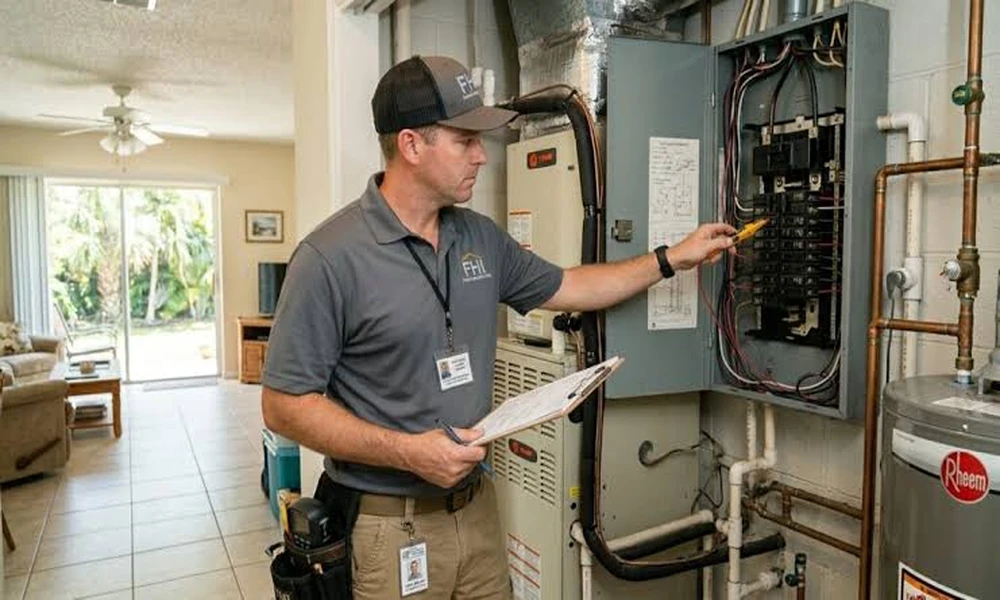

Homeowners insurance in Florida runs on paperwork, and for older houses the sheet that carries the most weight is the four point inspection. Carriers commonly ask for one once a home is around 25 to 30 years old, and it looks at only four systems: roof, electrical, HVAC and plumbing. The plumbing part fills less than a page, but it decides more policy outcomes than its size suggests. An underwriter reads every checkbox on it as a prediction about future water damage claims. Once you know what each line asks and which answer it is looking for, the report stops being a pass or fail verdict and becomes a practical list of repairs.
When that list points to plumbing work, it helps to hire someone who knows what the underwriter will want to see afterward. Better Call Sam Plumbing is a Florida state certified plumbing contractor working across Lee and Collier County, from Cape Coral and Fort Myers down to Naples and Marco Island. Its everyday jobs match the items this form flags most often: whole house repipes that move homes from aging copper to PEX, tank and tankless water heater replacements, hidden leak detection, and repairs to faucets, toilets and shower valves. Quotes are flat rate and given upfront, which matters when an insurance deadline is setting the schedule. Book a free quote well before your binding date so the corrected report is ready in time.
Who Is Allowed to Sign It
The Citizens sample form, which most private carriers’ versions follow closely, has to be completed, signed and dated by a licensed Florida professional. That can be a general, residential or building contractor, a building code inspector, or a home inspector. A professional licensed in one specific trade may sign only the section for that trade. This rule is useful to homeowners. After plumbing repairs are done, a licensed plumbing contractor can document and sign the plumbing portion without the other three systems being inspected again.
Before you rely on any signature, look up the license number with the state’s license verification tool from the Department of Business and Professional Regulation. It shows the holder’s profession and whether the license is active. Photos also go with the form. The required plumbing photos are the water heater with its relief valve, the plumbing and drains under each cabinet, and any exposed valves.
The Age Lines Added in the Latest Revision
Citizens revised the form in March 2025, and most of the new detail landed in plumbing. The updated supplemental fields now ask for the age of the supply piping, the age of the drain piping, the age of the water heater, and the year any PEX was installed. Each piping system is marked as original to the home, completely repiped, or partially repiped. The year and extent of any renovation go in the comments.
“Original to home” on a house built in 1986 tells the underwriter the pipes are about 40 years old, and no further explanation is needed. “Partially repiped” leads to a follow-up question about which sections are still original. The cleanest answer to either line is a repipe permit with a final inspection date, so keep that permit with your invoices.
Drain age is a newer focus. Many Florida homes built in the 1960s and 1970s still have cast iron drains under the slab. Those lines corrode from the inside and can scale shut long before a toilet backs up.
Pipe Material and the Polybutylene Question
The form lists copper, PVC or CPVC, galvanized, PEX and “other” as checkboxes, plus ABS and cast iron for drains. Polybutylene gets its own separate yes or no line, because many insurers will not write a policy on it at all.
Polybutylene is a gray plastic supply pipe that was widely installed from 1978 until the mid 1990s, and Florida was one of the states where it was used most heavily. InterNACHI’s guidance for inspectors explains that this pipe deteriorates from the inside. That means you cannot judge its condition by looking at the outside. Once it is identified, removing it is usually the only answer an underwriter will accept.
Galvanized steel is the other material that tends to cause trouble. Rust builds up inside the pipe, restricts flow and eventually leaks at the threaded joints. CPVC usually passes, though inspectors do note sections that have turned brittle or discolored in hot attics. The new PEX year field exists because some PEX era products have their own failure history. The best known is a composite PEX and aluminum line sold from the mid 1990s into the late 2000s.
| Line on the form | What the inspector records | Answer that draws scrutiny | Usual path forward |
|---|---|---|---|
| Age of supply piping | Original, partial or complete repipe, with year | Original in a home past 30 years | Repipe records, or a repipe |
| Age of drain piping | The same three choices | Original cast iron under a slab | Camera inspection, then lining or replacing sections |
| Pipe type | Copper, CPVC, galvanized, PEX, other | Galvanized, or an unidentified “other” | Replacement with PEX or copper |
| Polybutylene | Yes or no | Yes, in any amount | Full removal |
| Year PEX installed | Install year | Blank, or a composite product from that era | Invoices, or replacing the affected lines |
| Water heater age | Age in years | Past its typical service life | Tank or tankless replacement |
| Relief valve | Present and photographed | Missing, capped, or no discharge line | New valve and discharge piping |
The Fixture Grid
Below the materials section is a grid that rates the dishwasher, refrigerator, washing machine, water heater, showers and tubs, toilets, sinks, sump pump, main shutoff valve, and all other visible plumbing. Each one is marked satisfactory, unsatisfactory or not applicable.
Small problems can earn an unsatisfactory here. Common examples are a corroded braided line feeding the ice maker, rubber washer hoses that have started to bulge, a shutoff valve under a sink that weeps, or a main shutoff that will not turn. The form’s comment prompt names leaks, wet or soft spots, mold, corrosion, and grout and caulk. That means a failing caulk line around a tub can count against the showers line on its own.
Leaks, Past and Present, and the Relief Valve
Two short questions follow: is there any sign of an active leak, and is there any sign of a prior leak. A “yes” on prior leaks is not automatically fatal. A water stain on a sink cabinet floor from a trap that was later replaced is easy to explain if the comments include the repair and its date.
The form then asks whether the water heater has a temperature and pressure relief valve, and the 2025 revision made a photo of that valve mandatory. It also asks where the water heater is located. A tank in an interior closet or attic without a drain pan draws more attention than one in a garage.
These answers matter because the form’s own instructions say agents may not submit applications for homes whose plumbing is not in good working order or shows existing hazards. Any unsatisfactory mark therefore holds up the application until the problem is fixed and documented.
Reading Your Copy Before the Agent Does
Start with the checkboxes marked unsatisfactory, then read the comments to see exactly what the inspector saw. Next, compare the listed pipe and water heater ages against what your records show, because inspectors sometimes estimate where paperwork would give a firm date.
Small items such as supply lines, caulk and valves are inexpensive and quick to fix. Polybutylene, galvanized supply lines or failing cast iron drains usually mean a larger project. Once the work is done, an updated plumbing section with photos and invoices attached usually settles the file.








Leave a Comment