

Garage doors may seem like a mundane topic, but one innovation has quietly revolutionized how families use their home garages. The rise of sectional garage doors has turned garages from cluttered afterthoughts into streamlined, functional spaces, transforming not just convenience but the very architecture of residential living.
Origins of Garage Doors: The Early Days
Long before cars dominated the suburbs, garages served as storage sheds or carriage houses, often equipped with simple hinged or sliding doors. The real shift began in the 1950s when homeowners sought modern convenience for their growing car collections.
The Rise of Single-Panel Tilt-Up Doors
The single-panel tilt-up door was a game-changer in its era. Built from one solid slab of wood, aluminum, or metal, it could swing up and outward, then glide overhead on tracks. The appeal lay in its straightforward mechanism and the newfound ability to shelter a vehicle away from the elements. However, this early solution had its drawbacks.
Challenges and Limitations of Early Designs
Despite their popularity, single-panel doors required a large amount of clearance in front of the garage. Cars had to be parked several feet back while the heavy panel arced outward before retracting. This limited driveway usage and often led to frustrating miscalculations and occasional damage. Maintenance was another headache, with rails prone to failure and the heavy panel straining its hardware over time.
The Innovation of Sectional Garage Doors
Faced with these issues, manufacturers leaped forward with a solution that would redefine garage utility.
Development of Multi-Panel Sectional Systems
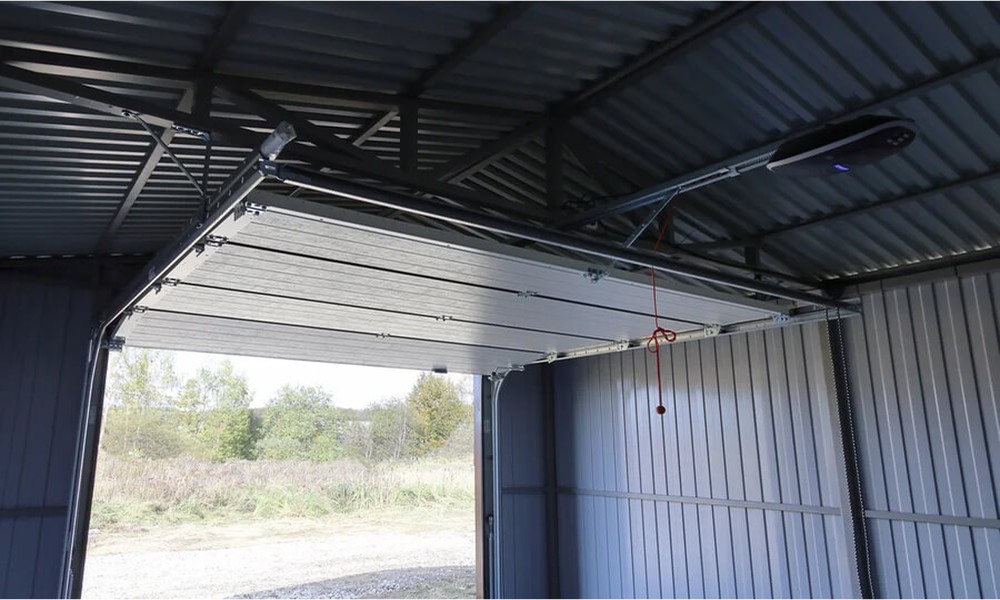
By dividing the door into several horizontal panels connected by hinges, the sectional garage door emerged. Each panel moved independently but in concert, guided along a pair of tracks that transitioned from vertical to horizontal. This design eliminated the bulky outward swing of earlier models, allowing the door to travel upward and flush with the ceiling.
How Sectional Doors Improved Space Efficiency
The impact was immediate. With no need for extra driveway clearance, homeowners could park directly in front of their garage. Inside, the overhead tracks hugged the ceiling, freeing up wall space for shelving, bikes, or workbenches. Garages gained precious square footage, supporting the shift toward multi-use spaces for storage, hobbies, or even home gyms.
Integration with Automatic Openers and Modern Mechanisms
Sectional doors paired perfectly with the growing popularity of automatic openers. Their balanced lift and smooth travel made automation straightforward, further cementing their practicality. Repairs became easier, too, as individual panels or components could be replaced without dismantling the entire door.
Comparing Garage Door Types Through Time
To understand why sectional doors now dominate, consider the evolution of available options.
| Feature | Single-Panel Tilt-Up | Sectional Door | Rolling Steel Door |
|——————————-|———————-|———————–|———————–|
| Space Needed (Front) | Significant | Minimal | Minimal |
| Ease of Automation | Moderate | Excellent | High (commercial) |
| Maintenance | Frequent, full door | Panel-based, easier | Expensive, specialized|
| Insulation/Modern Materials | Limited | High | High |
| Typical Use | Older residential | Standard residential | Commercial/Industrial |
The Role of Rolling Steel Doors in Commercial and Residential Settings
While residential garages were embracing sectional doors, commercial sites leaned into rolling steel doors. These models, seen in warehouses and storefronts, retract into a compact coil above the entryway. Their robust construction maximizes security and longevity, but their high cost and industrial aesthetic keep them mostly out of homes. However, brands like Dor Docteur portes basculantes commerciales offer expertise in these specialized installations for businesses needing maximum durability.
Why Sectional Doors Became the Residential Standard
Ease of use, flexibility, and space savings made sectional doors the norm. Their adaptability to various sizes, finishes, and insulation levels only accelerated adoption. As homes evolved, so did the expectations for a garage: more than a parking space, it became an extra room.
Technological Advances Enhancing Sectional Doors
The innovation did not stop with the basic sectional design.
Improved Materials and Insulation Benefits
Modern sectional doors feature steel, aluminum, and composite panels, often with built-in insulation. This enhanced thermal barrier helps homeowners save on energy costs and turn garages into comfortable workspaces year-round.
Enhanced Durability and Maintenance Ease
Corrosion-resistant materials, modular panel replacement, and stronger hardware have drastically reduced long-term maintenance headaches. Homeowners can update or repair specific sections instead of replacing the entire door.
Smart and Automated Garage Door Features
Remote openers, smartphone integration, and security cameras now come standard on many models. These upgrades reinforce safety and convenience, making the garage an integral part of the smart home ecosystem.
Impact on Residential Space Usage
Sectional garage doors didn’t just reimagine the entryway, they reshaped how the entire garage is used.
Maximizing Usable Garage Area with Sectional Doors
By eliminating the need for swing clearance, the entire driveway and interior footprint became fully usable. Storage solutions could be mounted along walls and even near the ceiling, making every inch count.
Changes in Garage Layout and Storage Solutions
Racks, hooks, and shelving systems proliferated, allowing garages to serve as organized hubs for tools, bikes, and seasonal gear. Homeowners discovered new potential for their “extra” room.
Influence on Home Design and Property Value
Architects and homebuyers now expect garages that add value, not just shelter. Well-designed, insulated, and organized garages appeal to modern sensibilities, often boosting resale price and curb appeal.
Future Trends in Garage Door Design
What innovations lie ahead for the humble garage door?
Emerging Technologies and Materials
Expect to see lighter, stronger composites, advanced insulation, and even transparent or semi-transparent panels for natural light.
Environmental and Energy Efficiency Considerations
Eco-conscious buyers are spurring demand for sustainable materials and energy-efficient designs, including solar-powered openers and recycled construction.
Potential Innovations in Space-Saving Mechanisms
As urban homes shrink, even more compact or multi-directional door mechanisms may emerge. Sectional doors proved how much a clever redesign can reshape daily life, future breakthroughs may be just around the corner.
In the quiet, functional background of daily routines, sectional garage doors have unlocked possibilities for homeowners, making garages more than just places to park. They have become flexible, valuable extensions of the modern home, thanks to a simple but transformative approach to space efficiency.





Leave a Comment